When you’re ready to upgrade to a modern SUV with advanced features, comparing the Mazda CX-5 vs. Subaru Forester is a natural step along the journey. As experts on the car shopping process, our team at Gunther Mazda is well aware of the factors that drivers consider, so in this 2026 Mazda CX-5 vs. 2026 Subaru Forester comparison, we’re taking a close look at the performance, dimensions, technology, and features of each SUV. Let’s put these two models side by side.
← Drag to scroll →
| 2026 MAZDA CX-5 | 2026 Subaru Forester | |
|---|---|---|
| Engine | 2.5L 4-cyl | 2.5L 4-cyl |
| Max Horsepower | 187 | 180 |
| Max Torque | 186 lb-ft | 178 lb-ft |
| Drivetrain | i-ACTIV AWD® | Symmetrical AWD |
| Max EPA-Est. MPG (Cty / Hwy) | 24 / 301 | 26 / 334 |
| Seating Capacity | 5 | 5 |
| Standard Cargo Space | 33.7 cu ft | 29.6 cu ft |
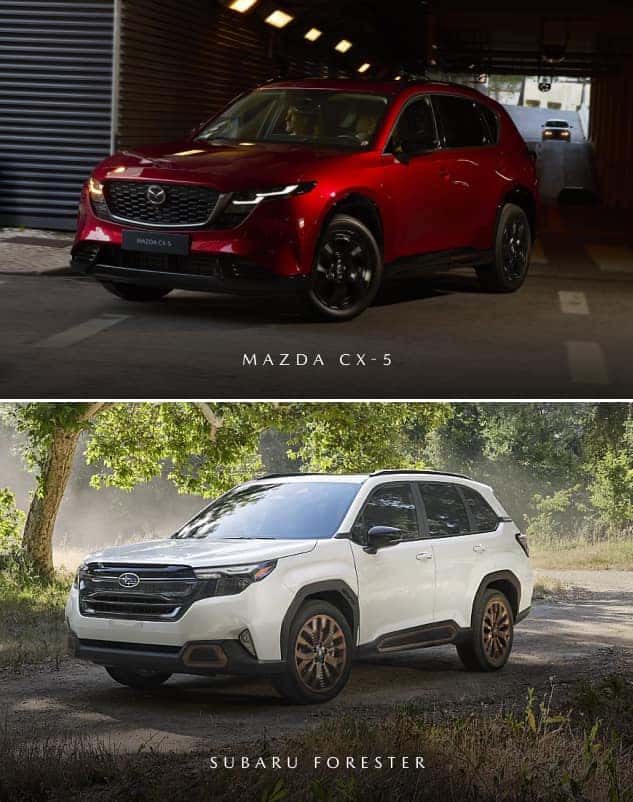
Right out of the gate, the 2026 Mazda CX-5 stands out with ample power. The standard 2.5-liter four-cylinder engine delivers 187 horsepower and 186 pound-feet of torque. It achieves this power with regular unleaded fuel – no need to spring for premium gas to get the best output. These numbers make a strong impression, especially when compared to the more modest output of the Subaru Forester. The Subaru SUV comes up short with 180 horsepower and 178 pound-feet of torque.
Every available model in the Mazda CX-5 SUV collection has standard i-Activ AWD®. This is an intelligent all-wheel-drive system that prevents wheel slip by monitoring dozens of data points, including temperature, wiper usage, and driver input signals – up to 200 times per second – to help prevent slipping before it even happens. The Subaru Standard Symmetrical All-Wheel Drive isn’t intelligent – it delivers the same amount of torque to all four wheels, all the time, regardless of exterior condition or driver input. It certainly provides traction but is less sophisticated than the preventive operation of i-Activ AWD®.
Rounding out the specs section, the Mazda CX-5 towing capacity reaches a maximum of 1,500 pounds,3 which is the same as the maximum towing capacity of all but one Subaru Forester model.4 The Forester technically can tow up to 3,500 pounds, but that capability is limited to the Wilderness model – a configuration designed specifically for off-road use and at a higher price point than many drivers prefer.
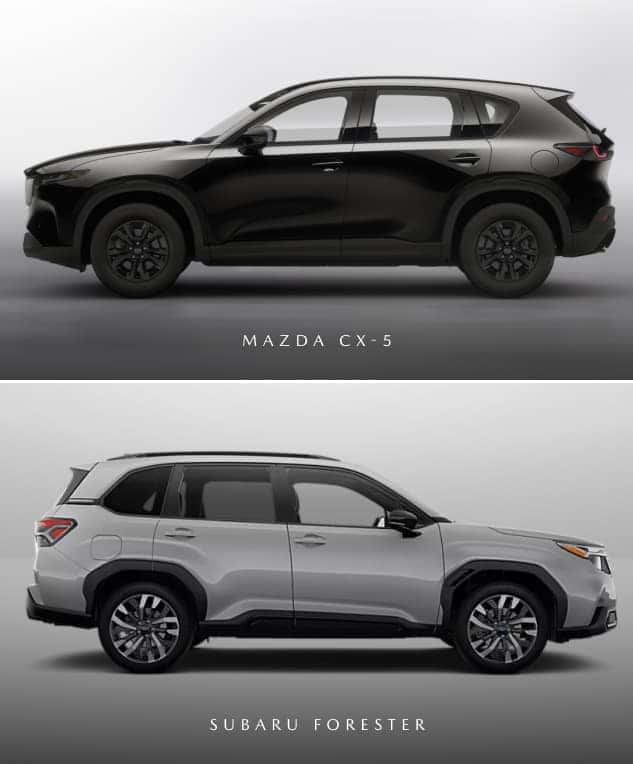
The 2026 Mazda CX-5 has been completely redesigned: It’s larger and offers more interior room for cargo, as well as an enlarged passenger area with wider opening doors for easier entry and exit. It’s 184.6 inches long, 73.2 inches wide without the exterior mirrors, and up to 66.7 inches tall. These dimensions allow the new Mazda CX-5 to provide second-row passengers up to 40.2 inches of headroom (in trims without a moonroof), 55.6 inches of shoulder room, and 39.9 inches of legroom.
The Subaru Forester measures 183.3 inches in length, 72 inches wide without the mirrors, and 68.1 inches tall without roof rails for non-Wilderness trims. Inside the Forester is up to 39.6 inches of headroom, 56.7 inches of shoulder room, and 39.4 inches of legroom. The Subaru Forester vs. Mazda CX-5 dimensions debate reveals that the Subaru SUV is slightly shorter and narrower than the Mazda model, leading to a more cramped cabin.
With the newly redesigned Mazda CX-5, you’ll find 33.7 cubic feet of cargo space behind the rear seats, which is quite a bit more than the Forester offers with either 27.5 or 29.6 cubic feet. You’ll be grateful every time you load your Mazda SUV with groceries.
We invite you to learn about the Mazda CX-5 cargo space and how to configure your SUV to maximize the interior dimensions.
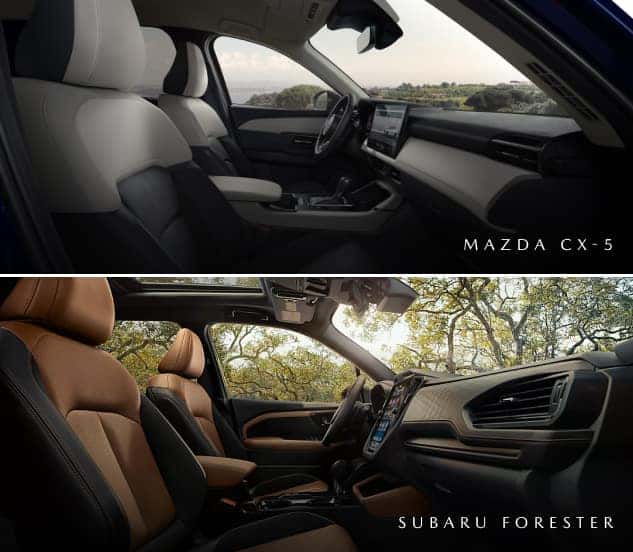
The Mazda CX-5 interior feels upscale and refined, with standard features that include a dual-zone automatic climate control system and pollen filter, leather-wrapped gear selector and steering wheel, black cloth seats with eight-way driver’s seat adjustment, and a 12.9-inch touchscreen center display.
In comparison, the Subaru Forester has six-way driver’s seat adjustment and cloth upholstery, and you have to upgrade trims to receive a leather-wrapped steering wheel and shift handle. Although it also has dual-zone automatic climate control, it does not have a pollen filter feature in any model in the range. Push-button start is not available in the base model of the Subaru Forester, but you’ll find it on every trim in the Mazda CX-5 lineup.
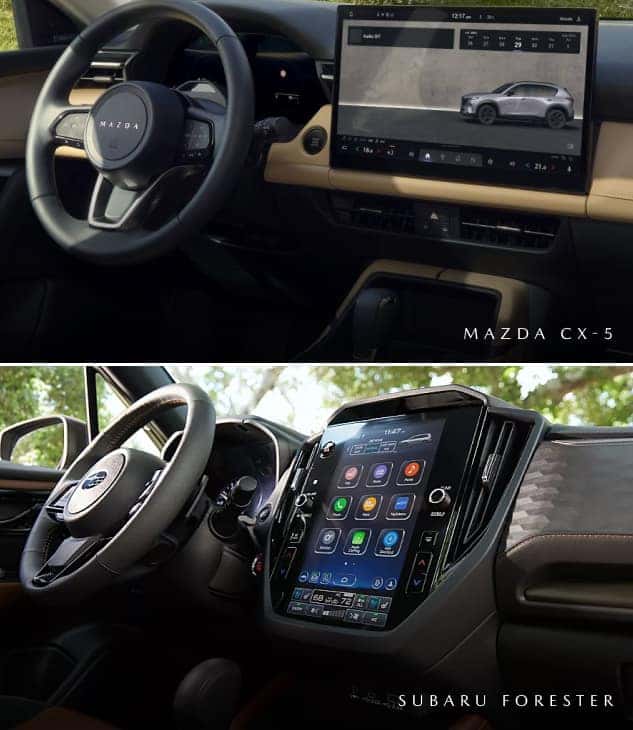
A 12.9-inch center touchscreen display comes standard in the Mazda CX-5, along with Android Auto™ and Apple CarPlay® integration for seamless connectivity. The entry-level Mazda CX-5 2.5 S equips an eight-speaker audio system, while higher trims have a 12-speaker Bose® premium audio system.
The Subaru Forester comes standard with a smaller dual 7-inch multimedia display. While it increases in size in higher trims, even the larger 11.6-inch screen is still more compact than the Mazda model’s standard display. Furthermore, the Forester has a four-speaker audio system as standard equipment, with higher trims offering six or 11 speakers. Even with the optional upgrades in higher trims, the Subaru SUV’s infotainment system doesn’t match the polished, high-tech experience inside the Mazda CX-5.
When it comes to safety, the Mazda CX-5 elevates peace of mind with advanced standard safety systems – many of which are only available in higher Forester trims. For example, the Mazda model has Blind Spot Monitoring with Rear Cross Traffic Alert, Lane-Keep Assist, and a more robust Smart Brake Support system as standard. Meanwhile, the Subaru Forester includes Blind-Spot Detection with Lane Change Assist and Rear Cross Traffic Alert in higher trims.
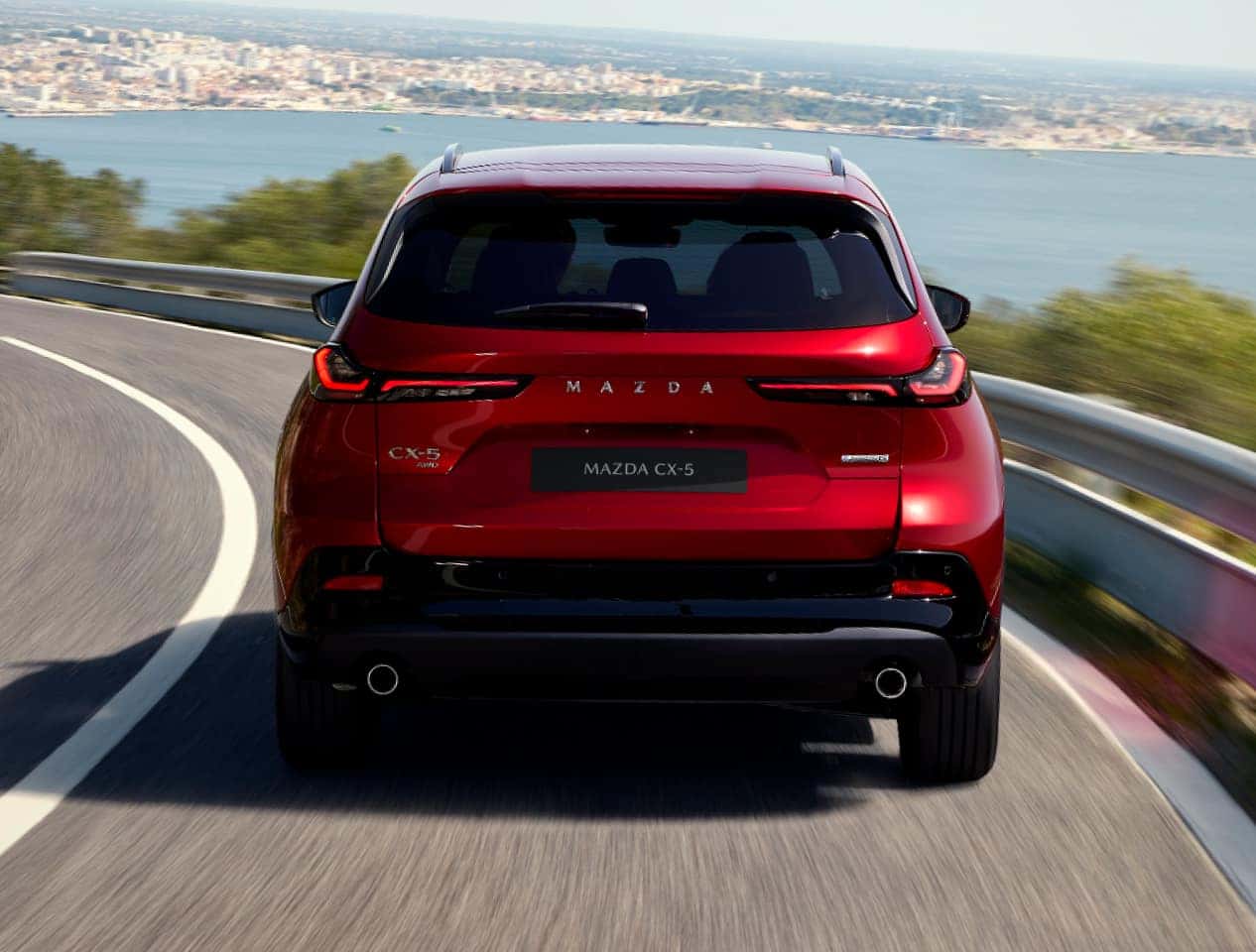
Both the Mazda CX-5 and Subaru Forester are excellent SUVs, but they each appeal to very different drivers. If you prefer upscale amenities and luxury-like aesthetics, the Mazda CX-5 makes an excellent choice. The Subaru Forester is designed for off-road capability and practicality, which makes it more well-suited for individuals who don’t care as much about interior refinement.
It’s clear from comparing the Mazda CX-5 vs. Subaru Forester features which SUV provides a refined experience. You can learn more about the Mazda CX-5 configurations or come see them in person at Gunther Mazda today.
The Mazda CX-5 is bigger than the Subaru Forester: 184.6 inches compared to 183.3 inches long. Inside, they both seat up to five passengers. The Mazda CX-5 also offers more standard cargo space than the Forester: 33.7 cubic feet versus 29.6.
The Mazda CX-5 has more standard features. Here are some examples:
While this is typically a preference question, at face value, the Mazda CX-5 appears to be the better vehicle. It has greater power and advanced technology, as well as an upscale interior. See the new Mazda CX-5 at your local Mazda dealership today.
| Mazda CX-5 vs. Kia Sportage | Mazda CX-5 vs. Toyota RAV4 | Mazda CX-5 Trims |
| Mazda CX-30 vs. Mazda CX-5 | Mazda CX-5 Colors | Mazda CX-50 vs. Mazda CX-5 |
1EPA-estimated mileage. Actual results will vary.
2EPA fuel economy estimates. Actual mileage will vary with driving conditions and your vehicle’s condition.
3Towing capacities shown are maximums and must be reduced by the weight of any passenger, cargo hitch or optional equipment in the towing vehicle. Please refer to vehicle Owner’s Manual for details regarding towing capacities and other valuable information. Towing a trailer may have an effect on vehicle’s handling, braking, durability, performance and driving economy. For specific information on recommended or required equipment, see your Mazda Dealer. Hitches are available through manufacturers other than Mazda.
4Maximum towing capacity varies by trim level. Trailer brakes may be needed. See your retailer for details.