Now that you’ve settled on purchasing a small SUV from a manufacturer that emphasizes both versatility and luxury at accessible prices, comparing the Mazda CX-30 vs. Mazda CX-5 is the last hurdle between your family and the perfect daily drives. These agile crossovers are adaptable, offering nearly 200 horsepower with their base engines, standard i-Activ AWD®, and excellent infotainment features, including standard and available center touchscreen displays that range from 8.8 to 15.6 inches (depending on the model).
Before you decide which one of these dynamic sport-utes to call your own, let’s explore some of the differences between Mazda CX-30 and Mazda CX-5 models. Categories like cargo space, towing strength, available output, and overall maneuverability vary, making each of them uniquely positioned to serve different needs. We at Gunther Mazda will walk you through all the reasons to purchase one or the other – but we ultimately recommend test-driving both with your family to see how they handle in a real-world environment.
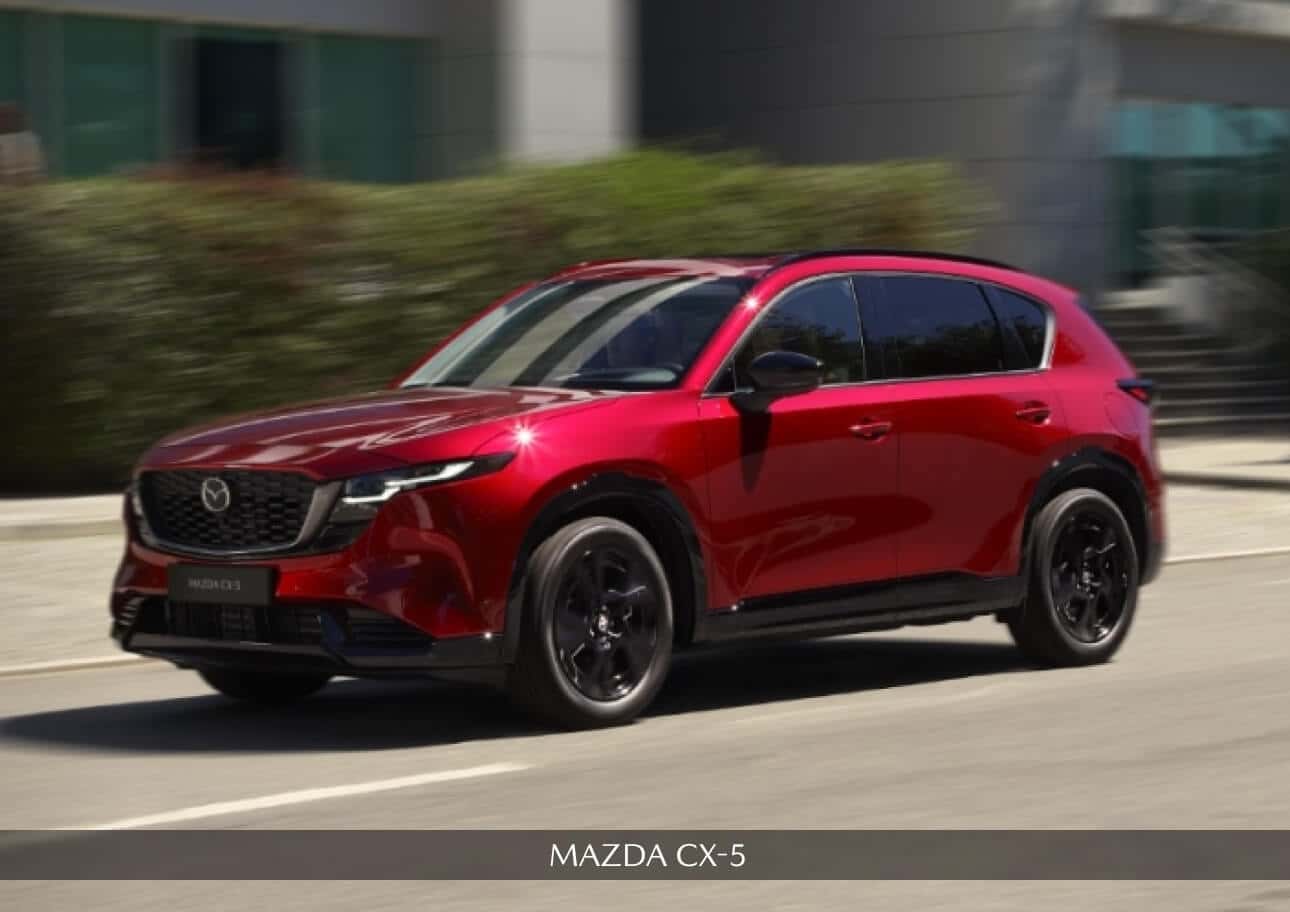
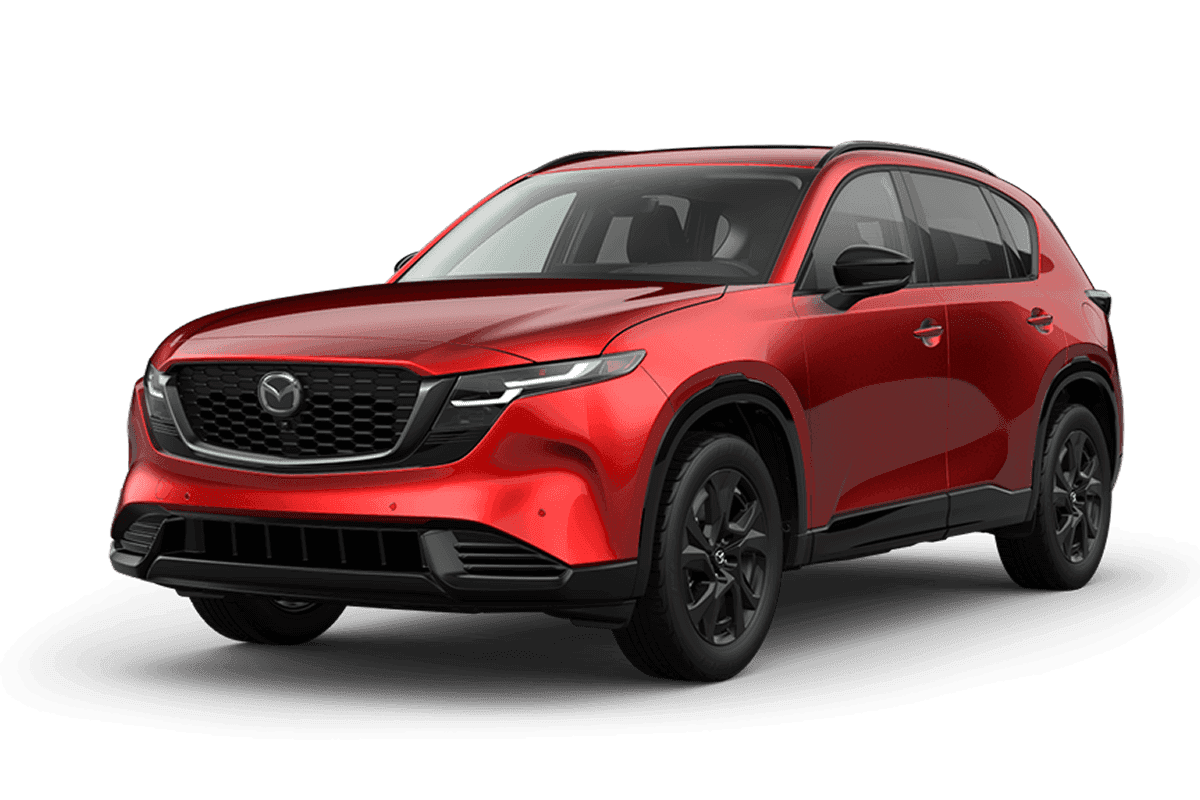
Mazda is dedicated to evolving its crossovers to maximize driver and passenger satisfaction. For 2026, the Mazda CX-5 underwent a complete redesign, becoming wider and longer, resulting in additional rear passenger space. It also received an interior overhaul, including the introduction of an available 15.6-inch touchscreen, seven standard ambient interior lighting options, and additional safety equipment.
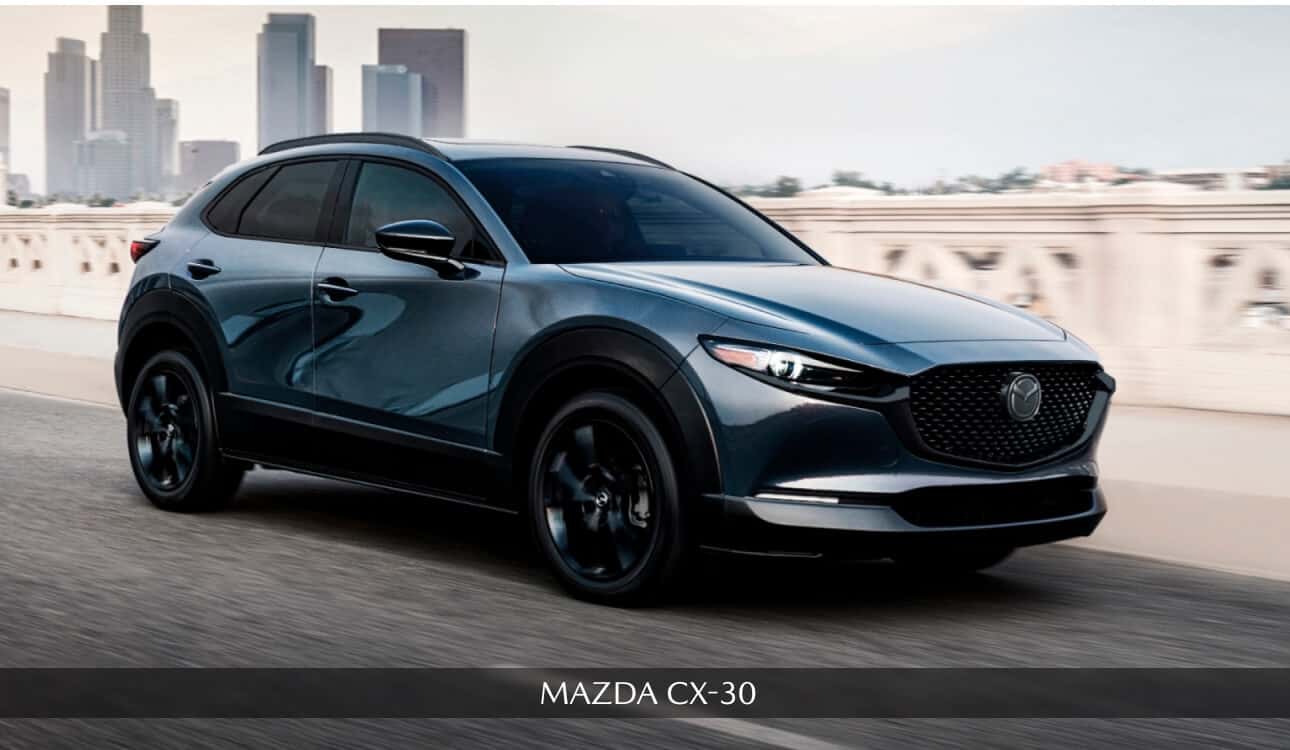
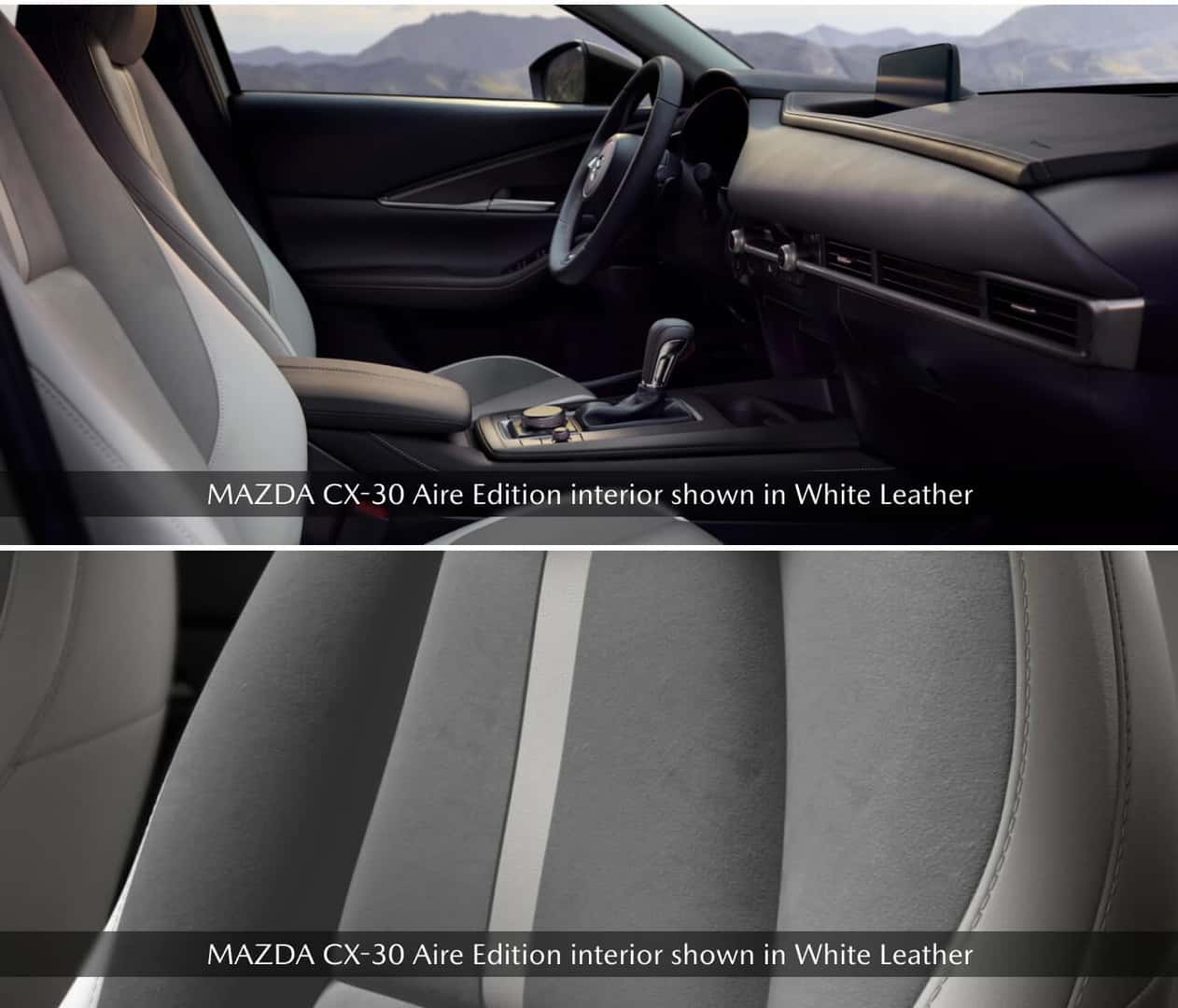
On the other hand, the Mazda CX-30 remains mostly unchanged in terms of dimensions and specs, but the brand added two new Aire trim levels that feature White leatherette seats and 18-inch Black alloy wheels. The higher tier of the two also boasts Gray microsuede inserts and interior trimming. In addition to these updates, both models are powered by a standard Skyactiv®-G 2.5-liter engine, but the Mazda CX-30 has a turbocharged trick up its sleeve; Mazda engineers removed the available turbo powertrain for the Mazda CX-5 during its refresh.
The Mazda CX-30 has a lower starting price than the Mazda CX-5 – a pattern that holds if you go up both vehicles’ trim ladders one rung at a time. However, the Mazda CX-30 has more rungs.
The 2026 Mazda CX-30 comes in the following trims:
Meanwhile, the Mazda CX-5 has the following tiers:
In addition to determining your SUV’s equipment, your Mazda CX-30 trim level can impact your vehicle’s performance, as the penultimate and range-topping variants utilize the available turbocharged engine, while all other variants have the base powertrain.

|
|
|
| 2026 MAZDA CX-30 | 2026 MAZDA CX-5 | |
|---|---|---|
| Engines |
|
SKYACTIV®-G 2.5L 4-cyl |
| Horsepower |
|
187 |
| Torque |
|
186 lb-ft |
| Drivetrain | i-ACTIV AWD® with Off-Road Traction Assist | i-ACTIV AWD® w/ Off-Road & Sport Modes |
| Transmission | SKYACTIV®-DRIVE 6-speed sport auto | SKYACTIV®-DRIVE 6-speed auto w/ manual shift |
| Max. EPA-Estimated MPG (Cty / Hwy / Comb) |
|
24 / 30 / 261 |
| Fuel Tank Capacity | 12.7 gal | 15.3 gal |
| Towing Capacity | Not recommended | 1,500 lbs2 |
| FIND MY MAZDA CX-30 | FIND MY MAZDA CX-5 |
As you can observe from the Mazda CX-30 vs. Mazda CX-5 specs above, the Mazda CX-30 offers drivers more output with its available turbo engine but lacks the towing potential of the Mazda CX-5. Both models achieve competitive MPG scores and deliver power to all four wheels via standard i-Activ AWD®. A Skyactiv®-Drive six-speed automatic transmission also comes standard for each SUV, but the Mazda CX-5 provides more engaging driving opportunities with its manual shift mode.
Of these two crossovers, the Mazda CX-30 is the smaller option, technically qualifying as a subcompact SUV. That being said, no matter the crossover you and your family climb into, spacious legroom and comfortable headroom await. You’ll find a closer look at the 2026 Mazda CX-30 vs. Mazda CX-5 measurements in the chart below.
vs.
Length
Height
Body Width
Min. Ground Clearance
Seating Capacity
Headroom (1st / 2nd Row)
Legroom (1st / 2nd Row)
Shoulder Room (1st / 2nd Row)
Hip Room (1st / 2nd Row)
Cargo Volume (Behind 2nd / 1st Row)
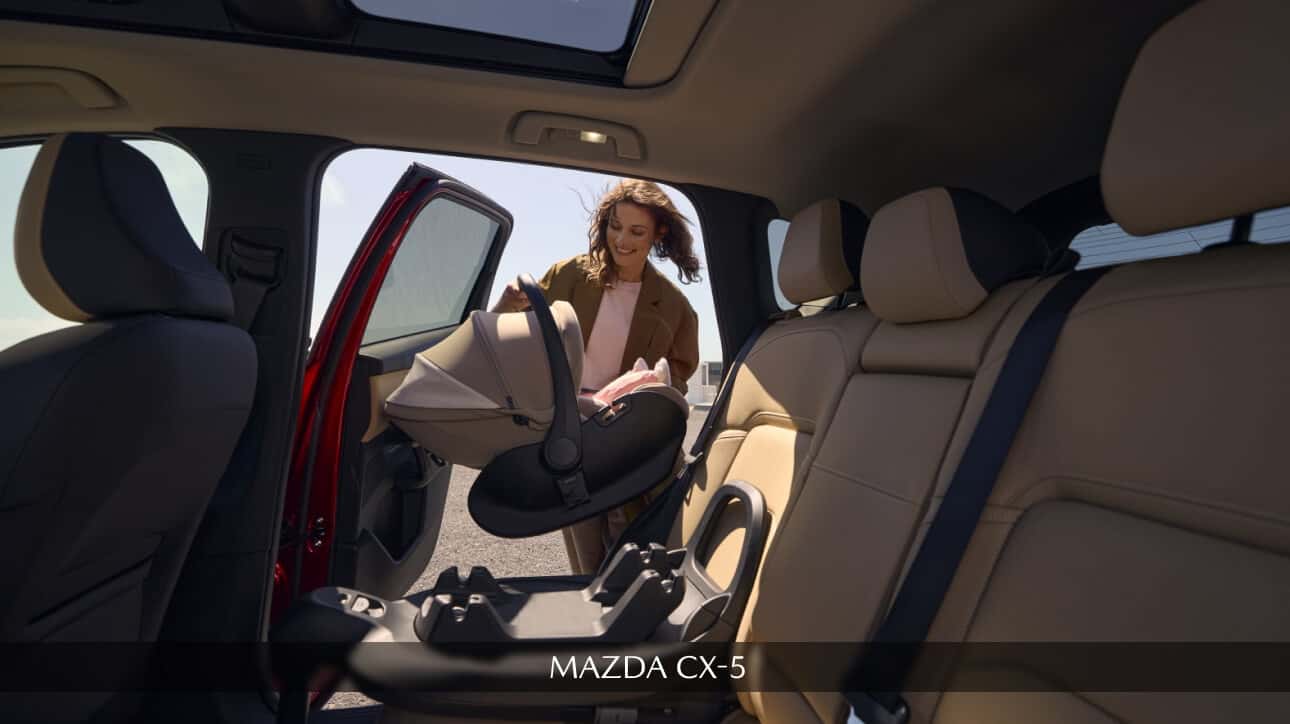
These SUVs have identical front-row legroom for 2026, but you may prefer one of our Mazda CX-5 lease specials if adults or larger teens will regularly be riding in the back seat, as it provides more second-row legroom than its smaller stablemate.
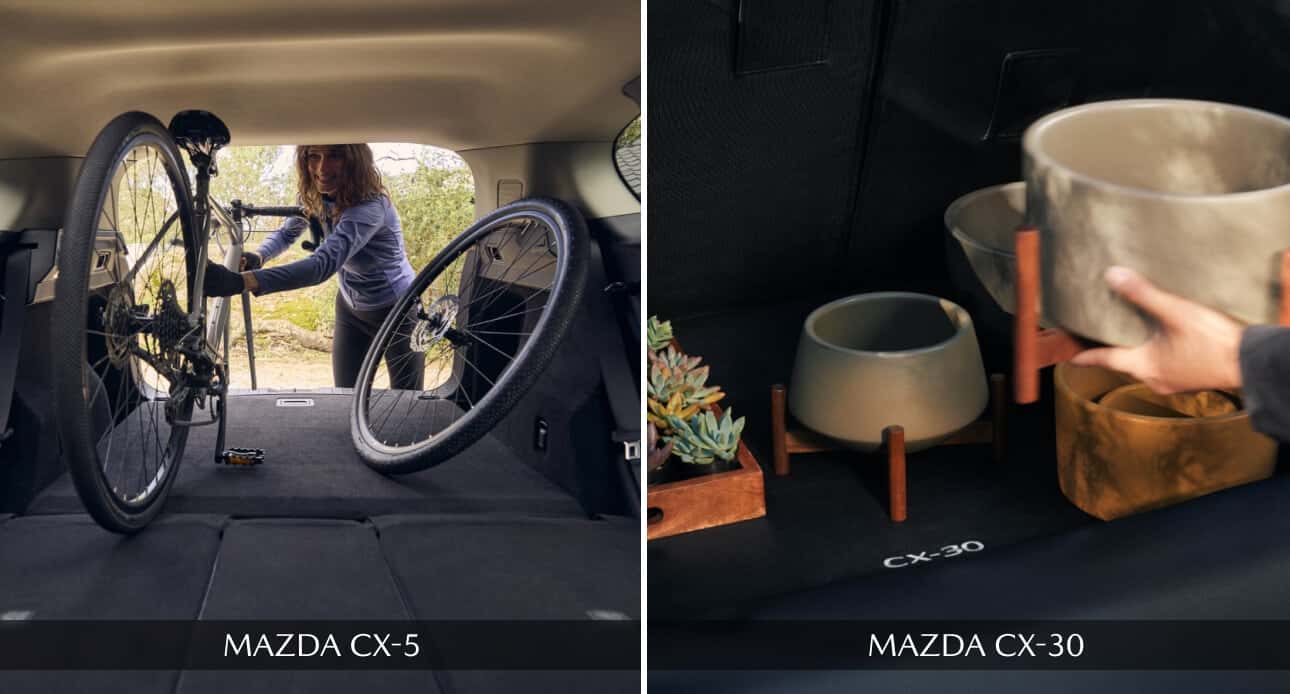
The Mazda CX-5 also gives your family more elbow room and greater cargo capacity, making it a prime option for families with a lot to move and a busy schedule. Meanwhile, crews that drive through the city may prefer the Mazda CX-30’s maneuverability to make parking or traffic navigation easier.
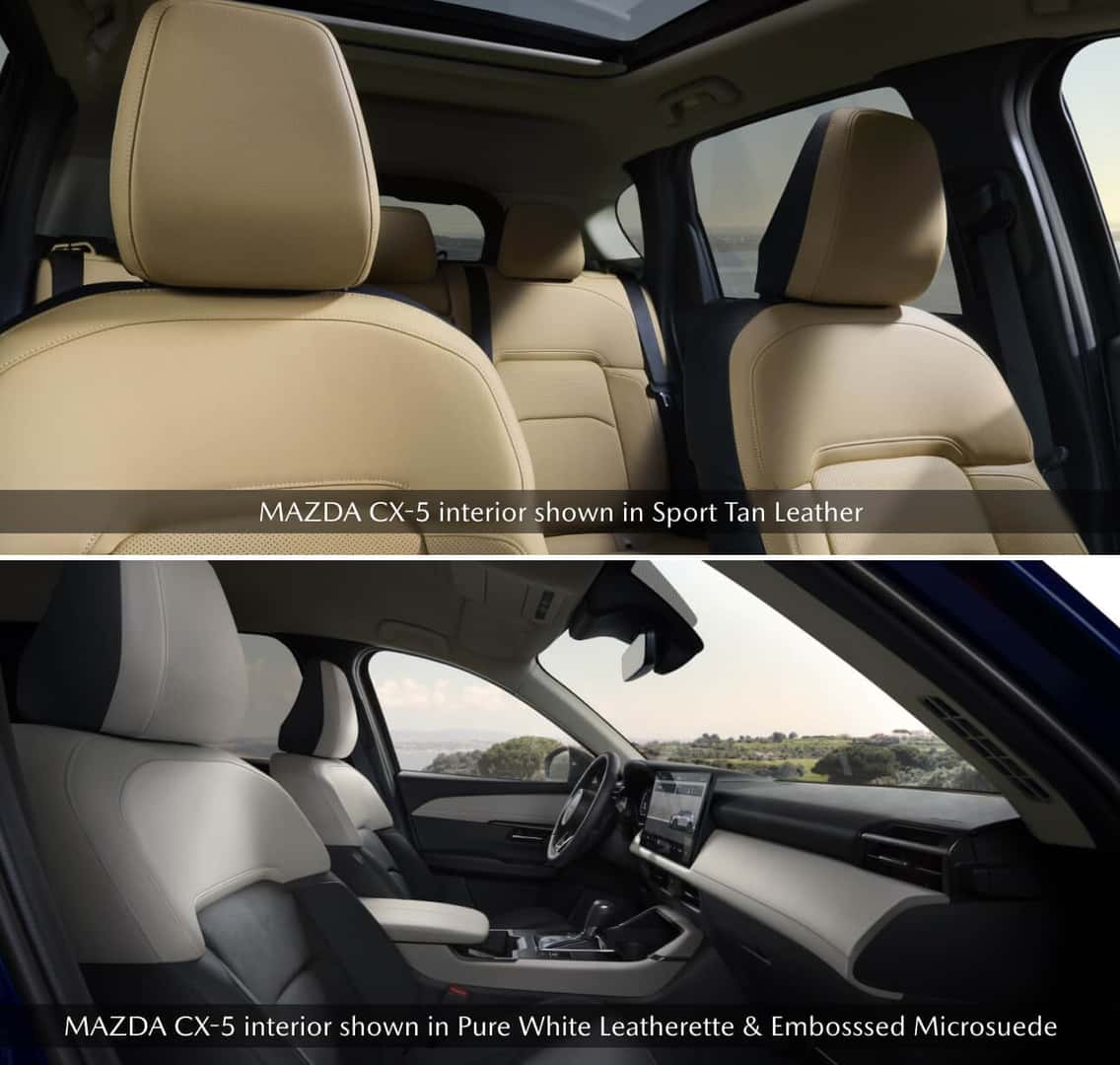
Comfort is the priority once you climb into either crossover, though the Mazda CX-5 provides a bit more in this category, especially when you reach higher trim levels. Both models offer available leather-trimmed seats and frameless auto-dimming rearview mirrors with HomeLink®. The larger SUV starts out with dual-zone automatic climate control, while you’ll have to opt for at least the second-tier edition to get it with the Mazda CX-30. Mazda CX-5 SUVs can also be equipped with ventilated front seats starting on the 2.5 S Premium trim – something you won’t find for the Mazda CX-30.
Your seating upholstery choices for the Mazda CX-30 include the following:
As for Mazda CX-5 upholstery, you’ll have these options, depending on the trim:
As with the interior themes, you’ll find similarities and differences between the Mazda CX-30 and Mazda CX-5 exterior paints. Here are their common colors:
Two differences in the 2026 Mazda CX-30 vs. Mazda CX-5 comparison are their white and blue exterior paint colors. The Mazda CX-30 can wear Snowflake White Pearl Mica and Deep Crystal Blue Mica, while the Mazda CX-5 has Rhodium White Premium and Navy Blue Mica – the smaller Mazda CX-30 also has an additional Ceramic Metallic hue.
Mazda automakers take safety seriously, which is why both vehicles are outfitted with the following standard driver-assistance technologies:
Additionally, the standard Mazda CX-5 Smart Brake Support system includes Reverse with Pedestrian Detection and Rear Cross Traffic Guidance – you’ll have to climb to higher trims to get Reverse and Rear Crossing Support on the Mazda CX-30.
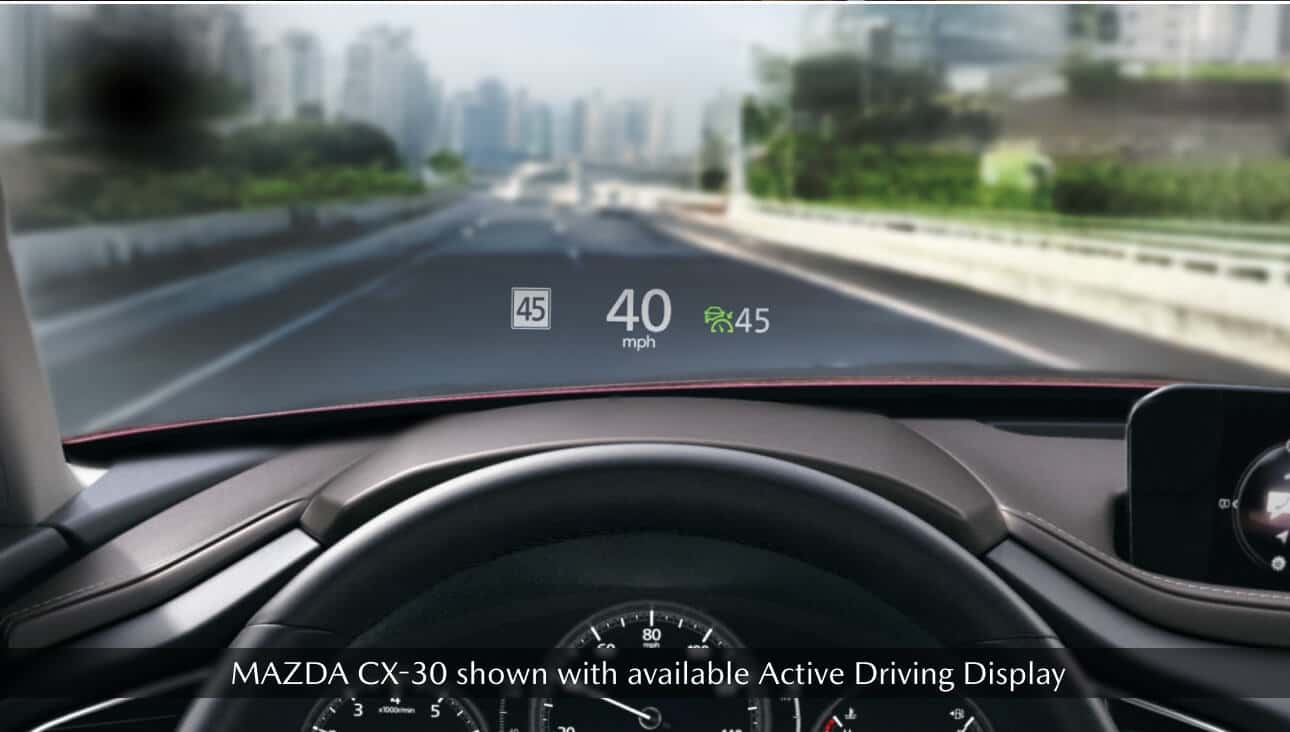
Upper-level trims of both models have more advanced features, such as a 360-Degree View Monitor, Traffic Sign Recognition, and a Windshield-Projected Active Driving Display.
The Mazda CX-5 and Mazda CX-30 both have a standard eight-speaker system, which can be upgraded to a 12-speaker Bose® Surround Sound System with Centerpoint® and AudioPilot®. Wireless Apple CarPlay® and Android Auto™ begin on the second-tier model for either SUV, with wired connections coming standard with the entry-level variants. Wireless phone charging is added at tier two of the Mazda CX-5 or tier three of the Mazda CX-30. As you can see, these SUVs both deliver plenty of advanced infotainment systems at the same or similar level.
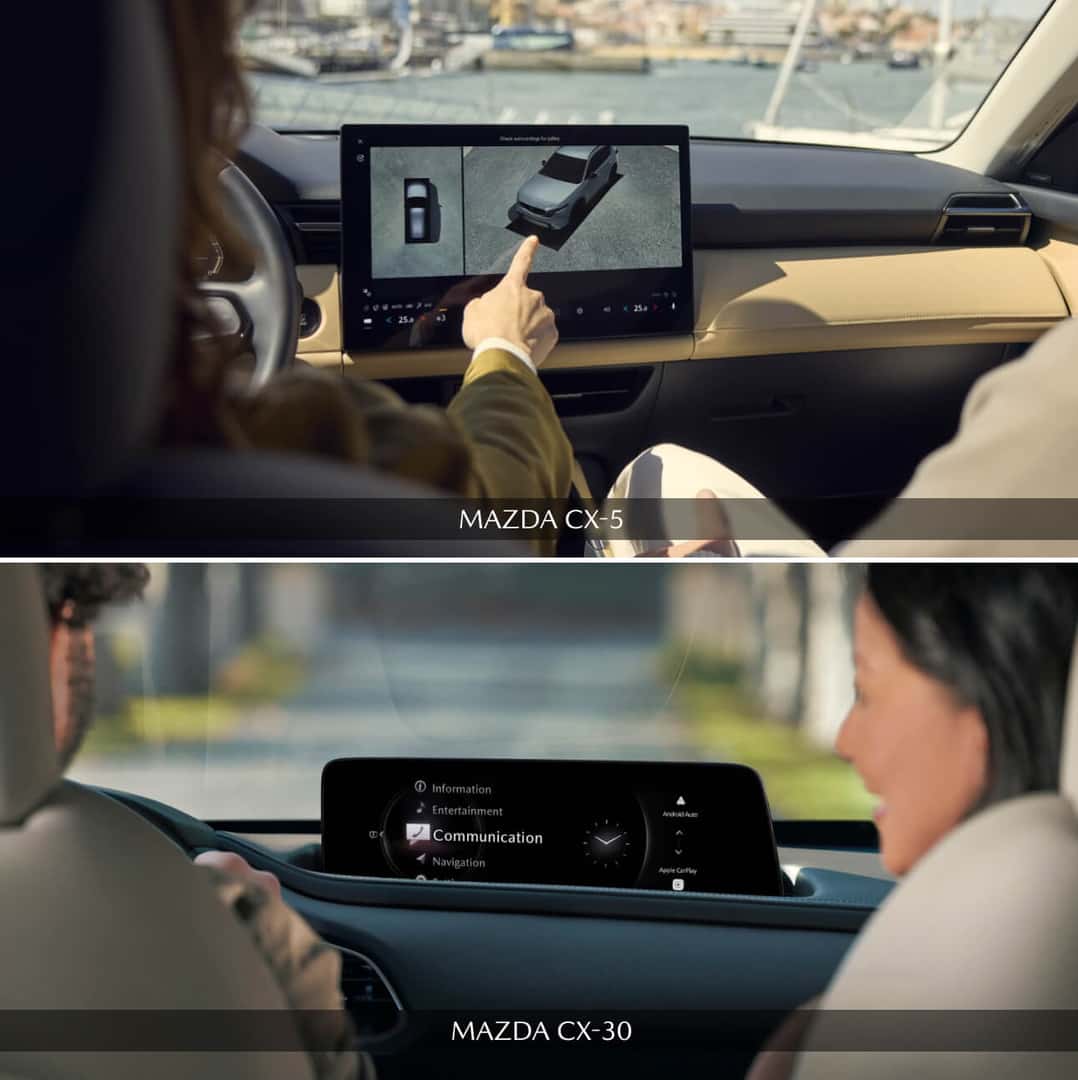
There are some differences with in-cabin technology, though. Where the Mazda CX-30 has either a standard 8.8- or available 10.25-inch central touchscreen, the Mazda CX-5 starts out with a 12.9-inch display and upgrades to a 15.6-inch one. Similarly, the Mazda CX-30 has a 7-inch LCD meter display across its lineup, whereas the Mazda CX-5 has a 10.25-inch LCD cluster.
Of course, to take advantage of these features with a shorter-term commitment than financing, you can always lease a Mazda CX-30 or Mazda CX-5 instead of buying one.
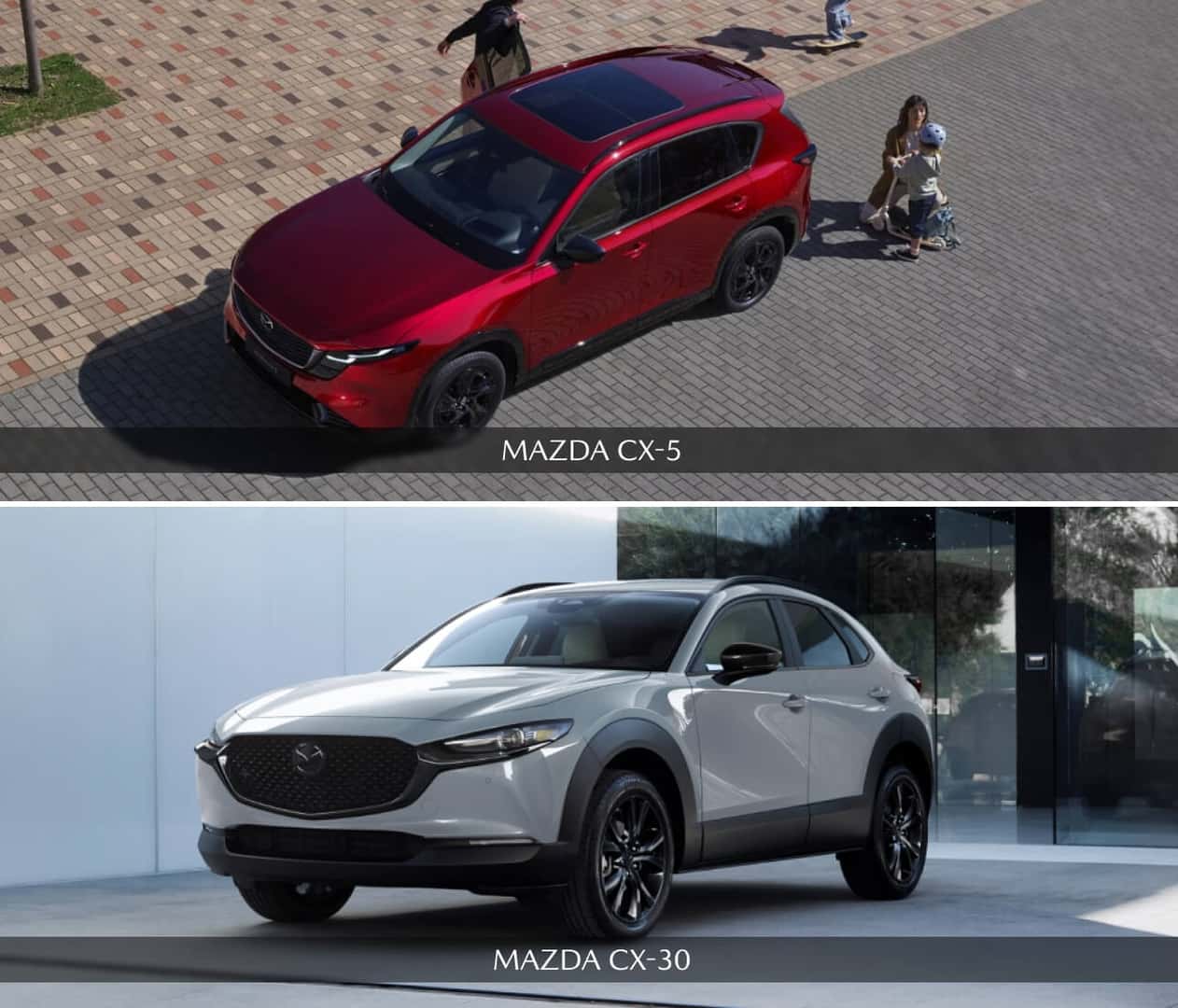
Each of these excellent vehicles has strong advantages. The Mazda CX-30 is more competitively priced and nimble, while the Mazda CX-5 has more cargo room, towing capacity, and standard luxury features. While it’s hard to go wrong with either SUV, our team at Gunther Mazda is ready to help you dive deep into the differences between Mazda CX-30 and Mazda CX-5 models. You can even schedule a test drive of both vehicles.
Please let our representatives know if you have any other questions about these crossovers or any other Mazda car or SUV in our inventory! They’ll happily walk through any aspect of Mazda ownership you have a question on, whether you want to conduct a 2026 Mazda CX-30 vs. 2026 Mazda CX-5 comparison in person or you want to learn about the complimentary maintenance you can receive by working with our dealership.
Whether the Mazda CX-30 or Mazda CX-5 is right for you depends on what you’re looking to get out of your ride. If towing is your primary concern, the larger Mazda CX-5 can haul up to 1,500 pounds,2 while the Mazda CX-30 is designed for pulling weight. However, the Mazda CX-30 is more maneuverable than its larger sibling, thanks to its subcompact dimensions.
Yes, the Mazda CX-30 is smaller than the Mazda CX-5. It technically qualifies as a subcompact crossover SUV, while the Mazda CX-5 is a compact crossover. Being smaller can have advantages, like easier parking. Plus, both models have 41.7 inches of front legroom, so you won’t feel cramped driving either. However, the Mazda CX-5 is better for those who want a more spacious second row.
The Mazda CX-5 is larger than the Mazda CX-30. The former is also the somewhat more luxurious of the two crossover SUVs, but it comes at a higher starting price if you compare similar trim levels. Choose the Mazda CX-30 for nimble sizing and more available output via a turbocharged engine or the Mazda CX-5 for superior cargo room and the ability to tow.
| Mazda CX-5 vs. Mazda CX-50 | Mazda CX-5 Colors | Mazda CX-5 Cargo Space |
| Mazda CX-5 Towing Capacity | Mazda CX-30 MPG | Mazda CX-5 Trims |
1EPA-estimated mileage. Actual results will vary.
2Towing capacities shown are maximums and must be reduced by the weight of any passenger, cargo hitch or optional equipment in the towing vehicle. Please refer to vehicle Owner’s Manual for details regarding towing capacities and other valuable information. Towing a trailer may have an effect on vehicle’s handling, braking, durability, performance and driving economy. For specific information on recommended or required equipment, see your Mazda Dealer. Hitches are available through manufacturers other than Mazda.